
AI Ads Automation: The Complete Guide for 2026
How AI helps businesses monitor performance, optimize budgets, and make faster, data-driven decisions across Google Ads and Meta Ads — without replacing the strategy only a human can bring.
Introduction
Digital advertising has never been this complex
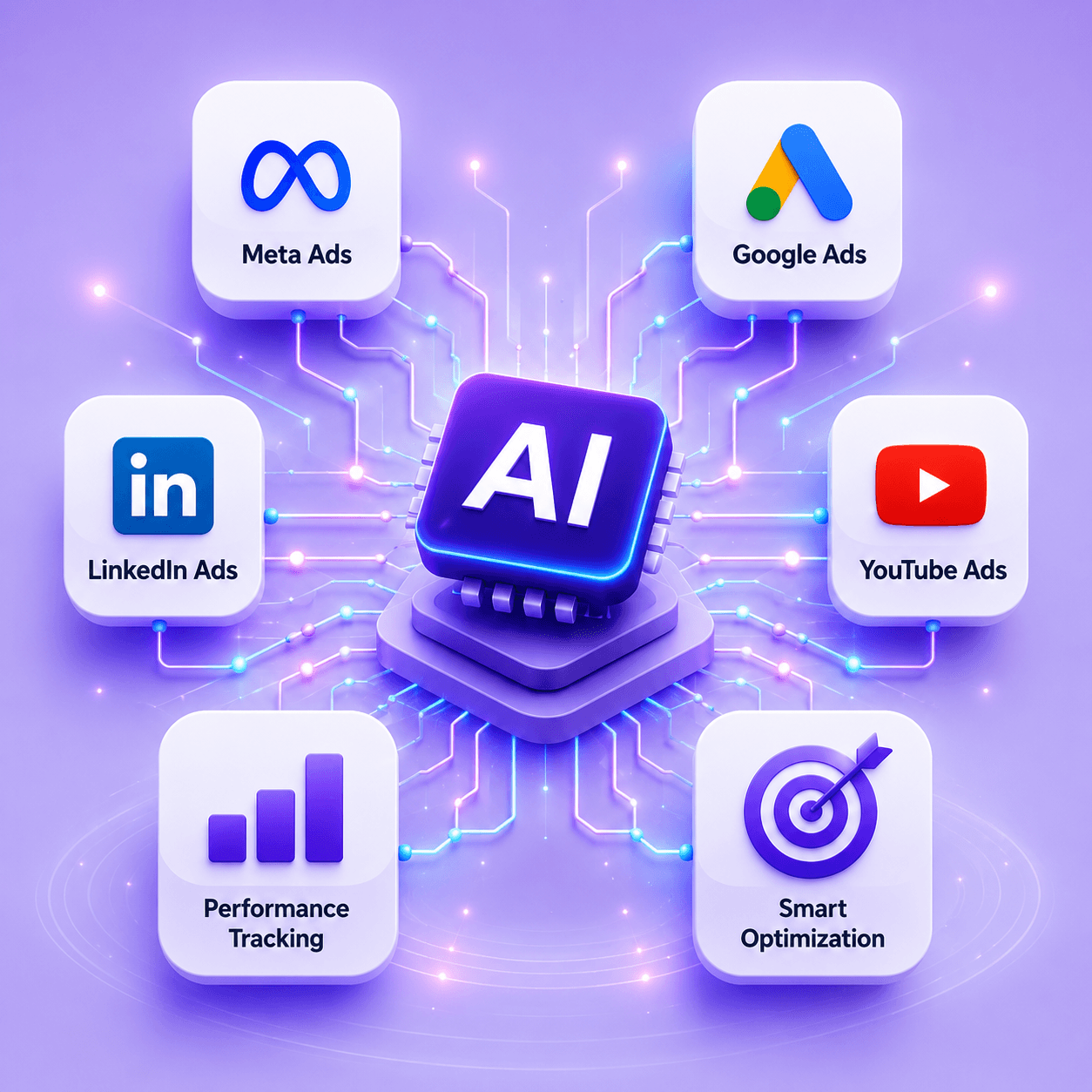
Digital advertising has evolved dramatically over the past decade. Businesses no longer rely on a single advertising platform to reach their audience. Instead, they manage campaigns across Google Ads, Meta Ads, LinkedIn Ads, YouTube, and other digital channels simultaneously. While this creates more opportunities to connect with customers, it also introduces new challenges. Marketers must monitor campaign performance, adjust budgets, test creatives, optimize bidding strategies, analyze audience behavior, and respond quickly to changing market conditions.
Managing all these activities manually can become overwhelming, especially as campaigns grow in size and complexity. A small delay in optimization can lead to wasted advertising budgets, lower conversion rates, and missed business opportunities. Modern marketing requires faster decision-making than ever before.
This is where AI Ads Automation is changing the way businesses approach digital advertising.
AI Ads Automation uses artificial intelligence and machine learning to simplify campaign management, improve efficiency, and support data-driven decisions. Instead of spending hours reviewing reports and manually adjusting campaigns, marketers can use AI to monitor performance, identify trends, recommend improvements, and automate repetitive optimization tasks.
Rather than replacing marketing professionals, AI serves as a powerful assistant that allows teams to focus on strategy, creativity, customer relationships, and business growth while reducing the time spent on repetitive operational work.
Whether you're running a local business, an ecommerce store, a SaaS company, a real estate agency, or a digital marketing agency, understanding AI Ads Automation can help you build smarter advertising strategies that adapt to today's competitive digital landscape.
The basics
What Is AI Ads Automation?
AI Ads Automation refers to the use of artificial intelligence technologies to assist in planning, managing, monitoring, and optimizing digital advertising campaigns. Unlike traditional automation, which follows fixed rules, AI systems continuously analyze campaign performance and identify opportunities based on patterns found in advertising data.
Every advertising campaign generates thousands of signals every day. These include impressions, clicks, conversions, engagement rates, audience interactions, keyword performance, creative performance, device behavior, geographic trends, and many other metrics. Processing this information manually takes significant time and often delays optimization decisions.
AI can process these large volumes of data much faster than manual analysis, helping marketers discover trends that might otherwise go unnoticed. By continuously evaluating campaign performance, AI supports faster decision-making while reducing repetitive manual work.
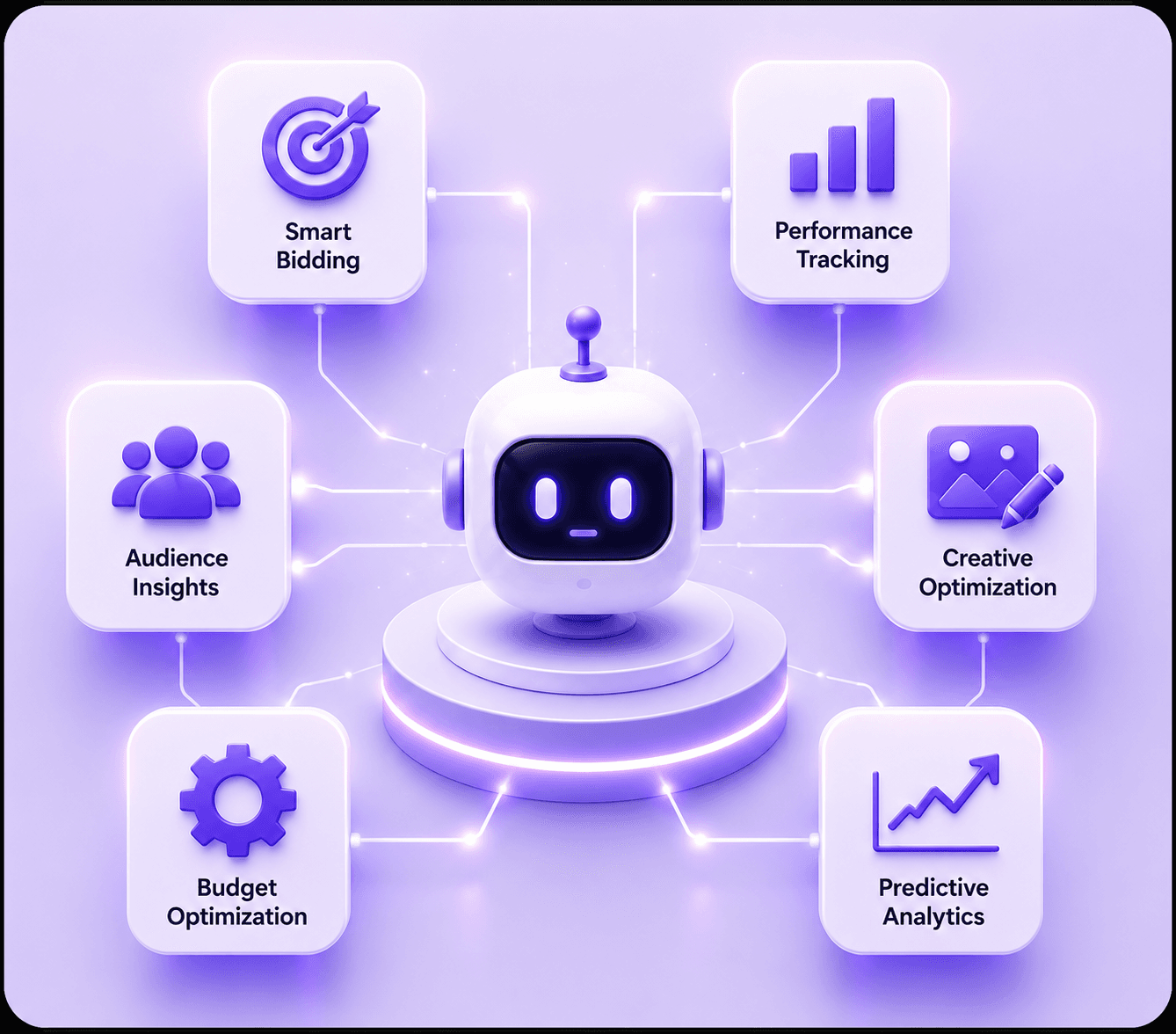
Modern AI advertising platforms can assist marketers with activities such as:
- Monitoring campaign performance in real time.
- Identifying underperforming audiences.
- Detecting creative fatigue.
- Recommending budget adjustments.
- Suggesting bid optimization opportunities.
- Highlighting keyword performance trends.
- Consolidating reports across multiple advertising platforms.
The objective is not to remove human decision-making but to improve efficiency by allowing marketers to focus on strategic planning instead of repetitive operational tasks.
The problem
Why Traditional Campaign Management Is Becoming More Challenging
Digital advertising platforms have become increasingly sophisticated. Businesses can now target customers based on demographics, interests, online behavior, purchase intent, geographic location, device usage, and hundreds of additional signals.
While these capabilities improve targeting precision, they also increase campaign complexity.
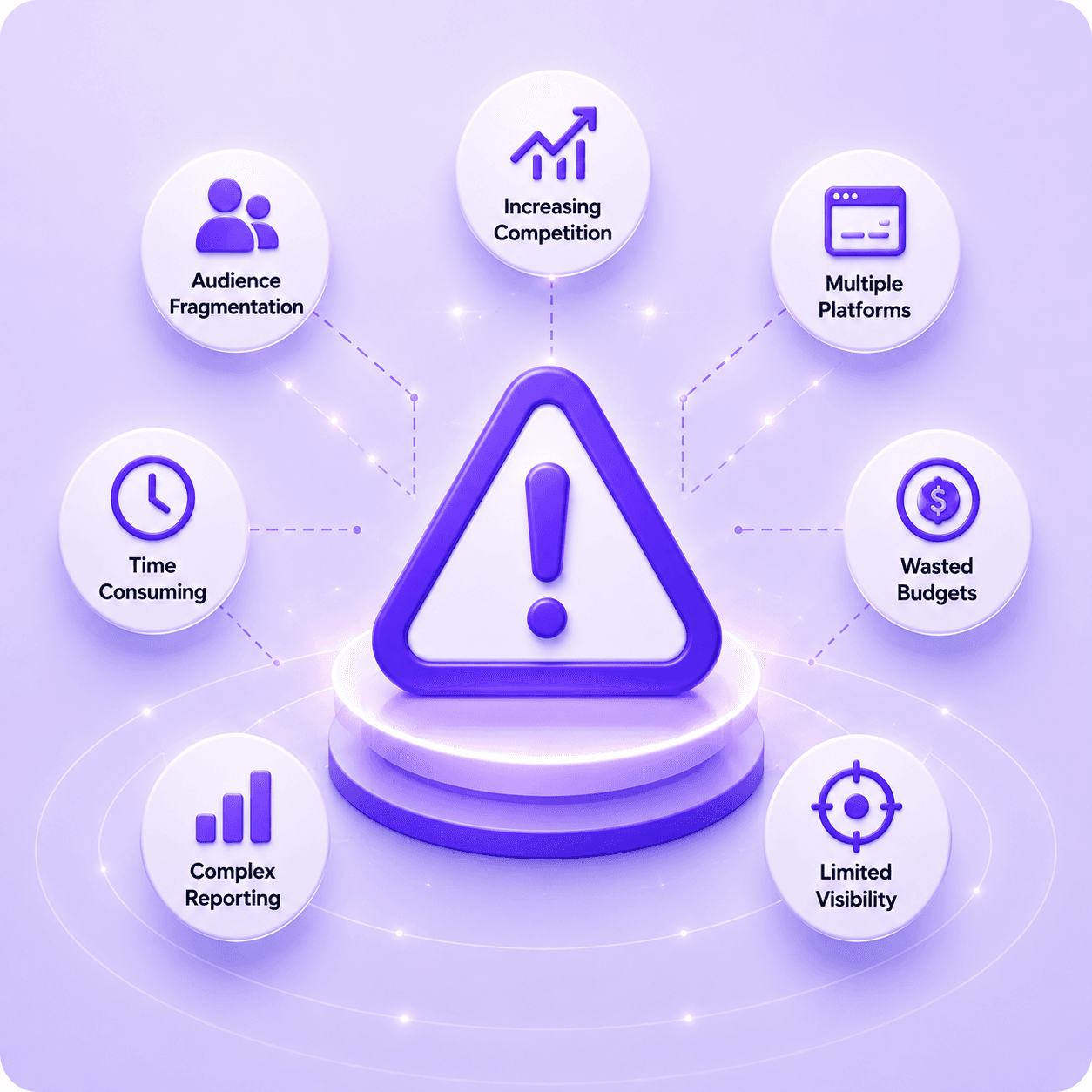
A marketing manager today may be responsible for:
- Managing multiple advertising platforms.
- Monitoring several campaigns simultaneously.
- Testing multiple creatives.
- Optimizing different audience segments.
- Managing advertising budgets.
- Reviewing conversion reports.
- Tracking attribution models.
- Responding to performance fluctuations.
Completing these tasks manually every day is time-consuming and increases the likelihood of delayed optimization decisions.
As businesses scale their advertising efforts, manual campaign management often becomes difficult to maintain consistently. AI helps simplify these processes by assisting with repetitive analysis while allowing marketers to remain in control of overall campaign strategy.
The workflow
How AI Ads Automation Works
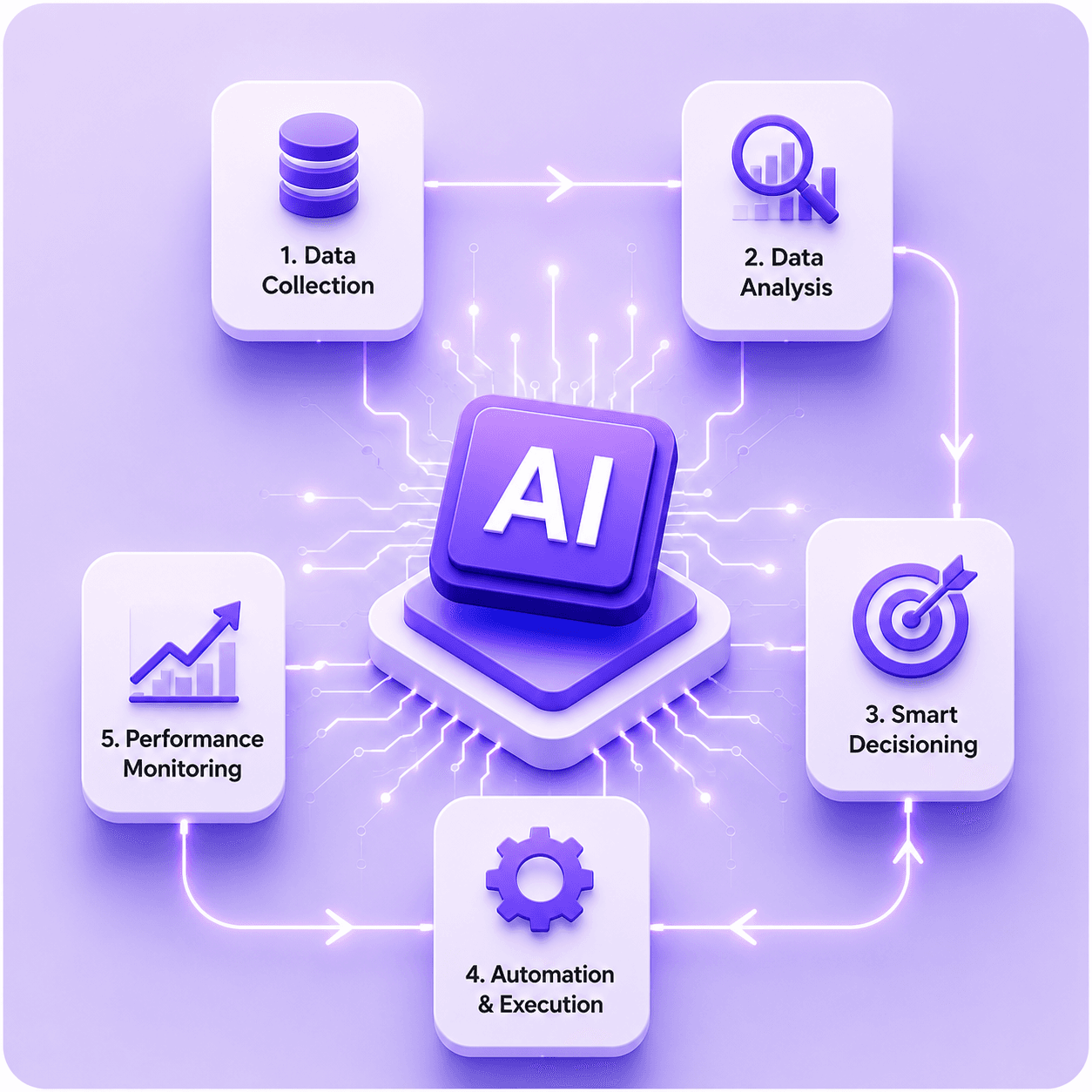
AI Ads Automation combines machine learning, predictive analytics, automation workflows, and performance monitoring to support advertising optimization.
Although different AI advertising platforms use different technologies, the overall workflow follows a similar pattern.
Step 1: Campaign Data Collection
The system gathers campaign data from advertising platforms such as Google Ads and Meta Ads. This includes information about impressions, clicks, conversions, audiences, keywords, budgets, creatives, and engagement metrics.
Step 2: Data Analysis
AI analyzes campaign performance to identify trends, opportunities, and potential issues. Instead of reviewing spreadsheets manually, marketers receive summarized insights that highlight important changes.
Step 3: Performance Prediction
Machine learning models analyze historical campaign data to estimate how different optimization decisions may influence future performance. These predictions help marketers make informed decisions rather than relying only on intuition.
Step 4: Optimization Recommendations
Based on campaign performance, AI recommends improvements such as:
- Budget reallocations
- Bid adjustments
- Audience refinement
- Creative updates
- Keyword optimization
- Campaign scheduling improvements
Some platforms allow marketers to review recommendations before implementation, while others support automated execution depending on user preferences.
Step 5: Continuous Learning
As campaigns continue running, AI evaluates new performance data and continuously improves future recommendations. This ongoing learning process helps campaigns adapt to changing audience behavior and market conditions.
Under the hood
Core Components of AI Advertising
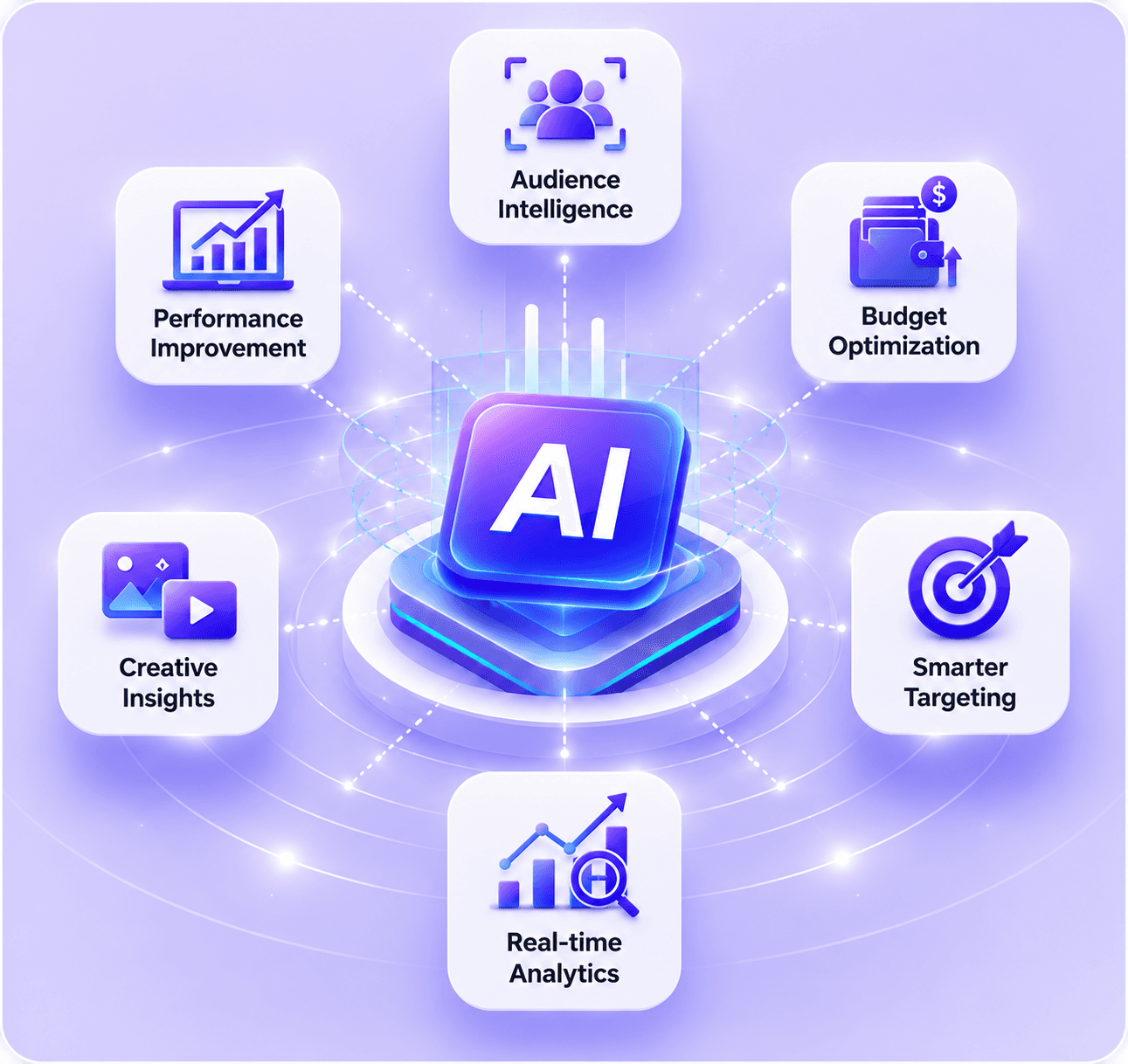
Successful AI advertising platforms generally include several important capabilities that work together to improve campaign performance.
Audience Intelligence
Understanding the right audience is essential for successful advertising. AI helps analyze customer behavior, interests, demographics, and engagement patterns to identify audience segments that are more likely to convert.
Instead of relying only on predefined targeting rules, AI can uncover valuable audience insights based on campaign performance trends.
Budget Optimization
Advertising budgets should be allocated efficiently across campaigns. AI can identify campaigns that perform well and recommend budget adjustments that improve overall efficiency while reducing unnecessary spending.
This helps marketers make informed budget decisions based on performance data rather than assumptions.
Creative Analysis
Advertising creatives significantly influence campaign success. AI can evaluate creative performance by analyzing metrics such as click-through rate, engagement, conversions, and audience interaction.
When performance declines, marketers can receive recommendations to refresh creatives or test new messaging before advertising effectiveness decreases further.
Performance Monitoring
Campaign performance changes constantly due to competition, seasonality, customer behavior, and market conditions. Continuous monitoring helps marketers identify important changes early, reducing the risk of prolonged underperformance.
Why it matters
Benefits of AI Ads Automation for Businesses
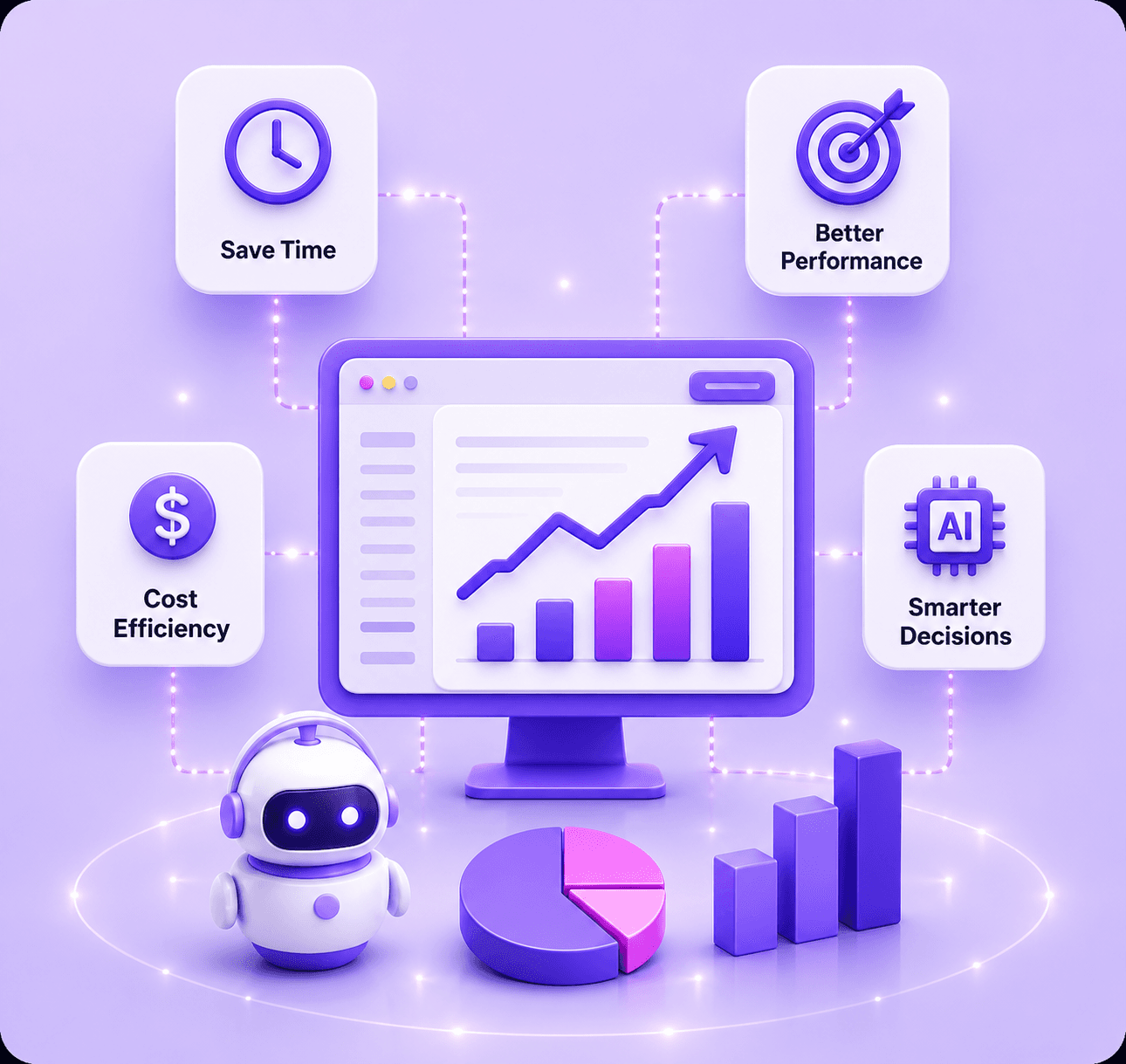
AI Ads Automation is becoming an important part of modern marketing strategies because businesses need faster optimization, better efficiency, and smarter decision-making. Instead of spending most of their time managing repetitive campaign tasks, marketers can use AI to improve performance while focusing on growth strategies.
1. Saves Time on Manual Campaign Management
Traditional campaign management requires marketers to regularly check performance, audience behavior, keyword performance, budget utilization, creative effectiveness, and conversion trends — which can consume several hours every week.
AI automation helps by continuously analyzing campaign data and highlighting important actions, freeing marketing teams to spend more time creating better strategies, developing new campaigns, improving customer experience, and testing new growth opportunities.
2. Improves Advertising Budget Efficiency
A campaign may generate clicks but fail to deliver quality conversions. Another may perform well but not receive enough budget to scale. AI helps identify these opportunities by analyzing performance patterns — surfacing which campaigns are generating better results, which audiences provide higher conversion value, and where budget adjustments may improve efficiency.
3. Faster Campaign Optimization
Competitor activity, market trends, customer behavior, seasonal demand, and creative fatigue affect campaign results constantly. Manual optimization often happens after performance drops — AI-powered platforms continuously monitor campaign signals and identify changes earlier, so marketers can act faster and reduce unnecessary spend.
4. Better Audience Targeting
Traditional targeting relies heavily on manually selected age groups, locations, interests, and behaviors. AI advertising platforms analyze large amounts of campaign data to identify patterns humans may miss — helping businesses reach people who are more likely to engage with their products or services.
5. Improves Creative Performance
Even with a strong audience and budget strategy, poor-performing creatives can reduce campaign effectiveness. AI helps analyze click-through rate, engagement rate, conversion rate, and cost per result to identify which headlines, visuals, and messaging perform better — and when a creative refresh is needed.
6. Enables Data-Driven Decision Making
Businesses often manage Google Ads, Meta Ads, LinkedIn Ads, analytics platforms, and CRM systems at once. AI advertising platforms help bring these insights together, so marketers make decisions using real-time performance data instead of assumptions.
Platform by platform
AI Ads Automation Across Google Ads & Meta Ads
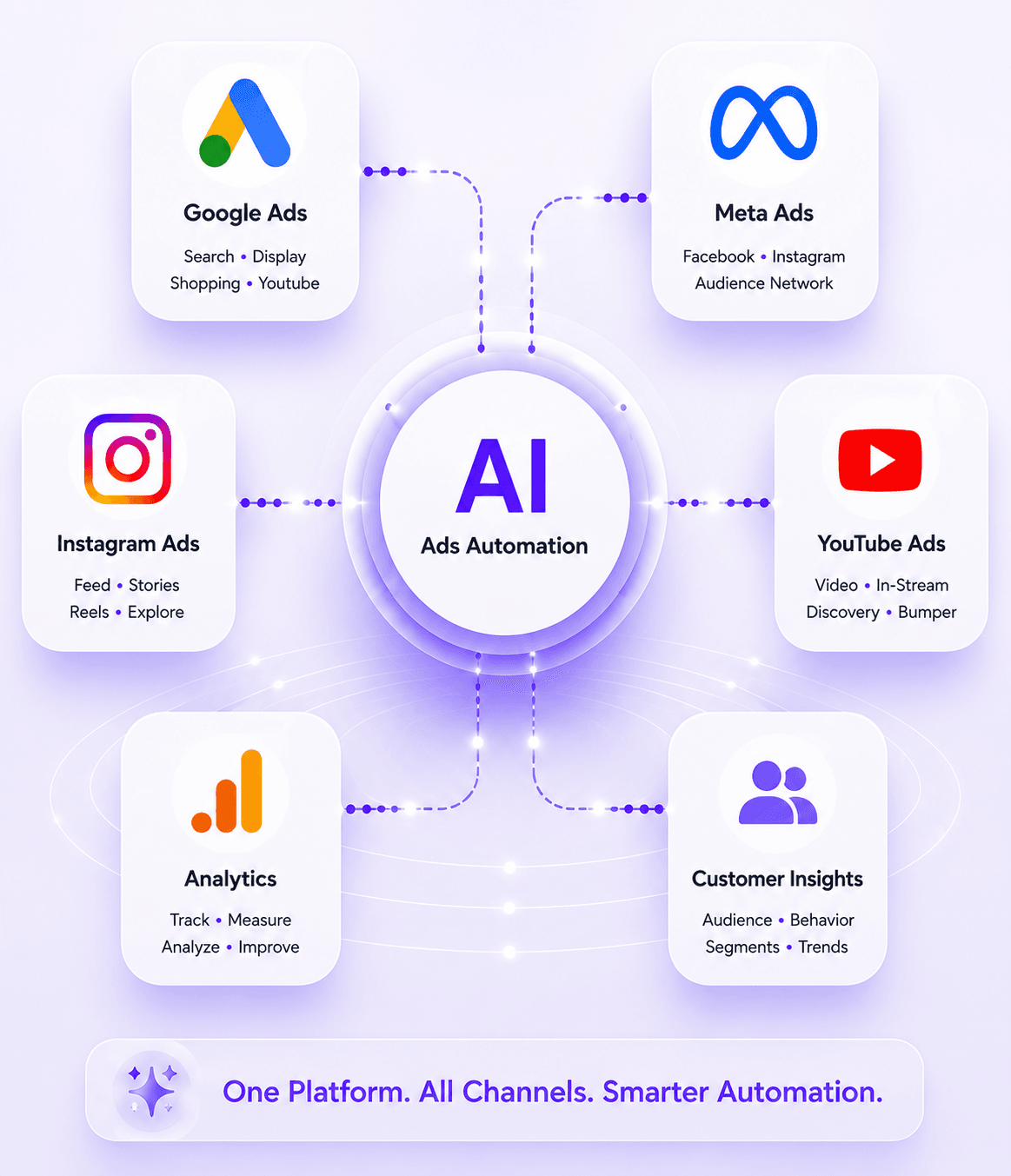
AI-powered advertising is not limited to a single platform. Businesses today run campaigns across multiple channels, and AI helps improve performance across different advertising ecosystems.
Google Ads Automation
Managing Google Ads campaigns requires continuous optimization of keywords, search terms, bidding strategies, budget distribution, ad copy, and audience signals. AI-powered automation helps marketers analyze performance and optimize these elements more efficiently, assisting with:
- Smart Bid Optimization — adjusting bidding strategies based on conversion data and campaign goals (more conversions, lower acquisition costs, higher ROAS).
- Keyword Performance Analysis — identifying high-performing keywords, low-performing search terms, and new keyword opportunities.
- Automated Ad Recommendations — suggesting improvements to headlines, descriptions, messaging, and audience relevance.
Meta Ads Automation
Meta platforms including Facebook and Instagram provide powerful advertising opportunities, but campaign optimization can become complex across multiple creatives, audiences, objectives, placements, and conversion tracking. AI-powered Meta Ads automation can support:
- Creative Optimization — evaluating creative performance to identify which ads generate stronger engagement and conversions.
- Audience Analysis — studying user behavior patterns to discover valuable audience groups.
- Campaign Monitoring — continuously tracking performance and helping marketers identify problems before they impact results.
Who it's for
AI Ads Automation for Different Business Types
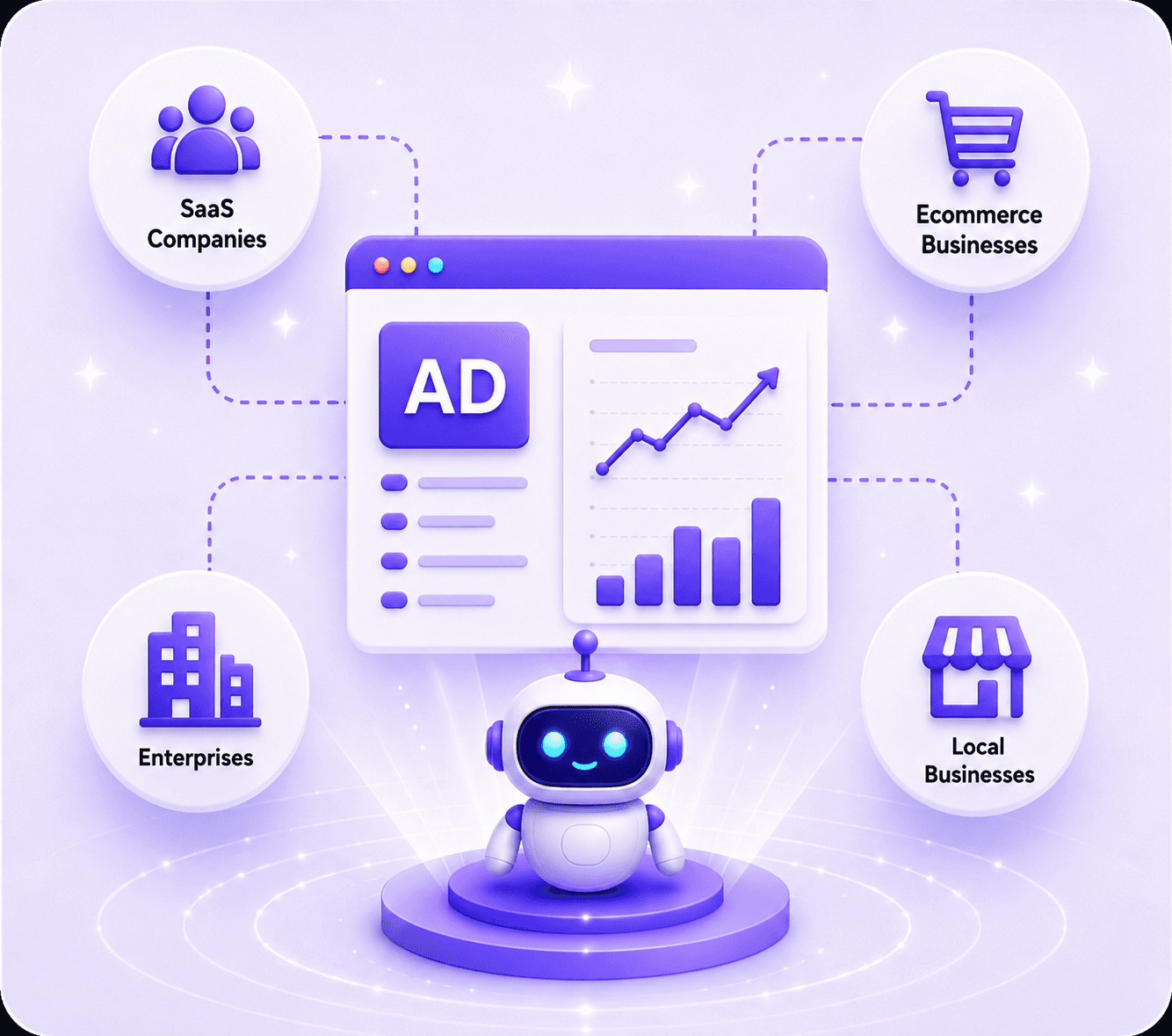
AI advertising automation can benefit different industries depending on their marketing goals.
SaaS Companies
- Optimize paid campaigns
- Identify high-value audiences
- Reduce customer acquisition costs
- Improve conversion tracking
Ecommerce Businesses
- Product promotion optimization
- Customer segmentation
- Retargeting strategies
- Creative testing
Real Estate Companies
- Identifying potential buyers
- Optimizing lead generation campaigns
- Improving audience targeting
- Reducing inefficient ad spending
Marketing Agencies
- Monitor campaigns efficiently
- Generate performance insights
- Scale account management
- Improve reporting processes
What to look for
Essential Features to Look for in an AI Advertising Platform
Choosing the right AI advertising platform is important because not all automation tools provide the same level of intelligence and control. A powerful AI advertising solution should not only automate tasks but also provide meaningful insights, optimization capabilities, and flexibility for different business requirements.
1. AI-Powered Campaign Optimization
Should continuously analyze performance and help identify underperforming campaigns, budget inefficiencies, audience opportunities, creative performance issues, and conversion improvement areas — helping businesses understand what actions can improve outcomes, not just displaying data.
2. Multi-Platform Advertising Management
An effective platform should support Google Ads, Meta Ads, LinkedIn Ads, and other channels from one place, helping marketers monitor performance, compare results, and make better decisions without switching between tools.
3. AI Creative Intelligence
Should analyze images, videos, headlines, ad copy, and CTAs to help businesses understand which creatives perform better, which messaging attracts customers, and when ads require refreshing.
4. Automated Reporting and Insights
Should surface campaign performance, conversion trends, cost analysis, audience behavior, and ROAS quickly — so marketers spend time analyzing opportunities instead of building reports.
5. Predictive Analytics
By analyzing historical campaign data, AI can identify possible future trends — expected performance, potential conversion opportunities, budget requirements, and future audience behavior — helping marketers make proactive decisions.
6. Human Control and Transparency
A reliable platform should let users review recommendations, approve changes, adjust automation settings, and understand why decisions are suggested. AI should support marketers, not operate as an unknown black box — the best results happen when AI and human marketing expertise work together.
The comparison
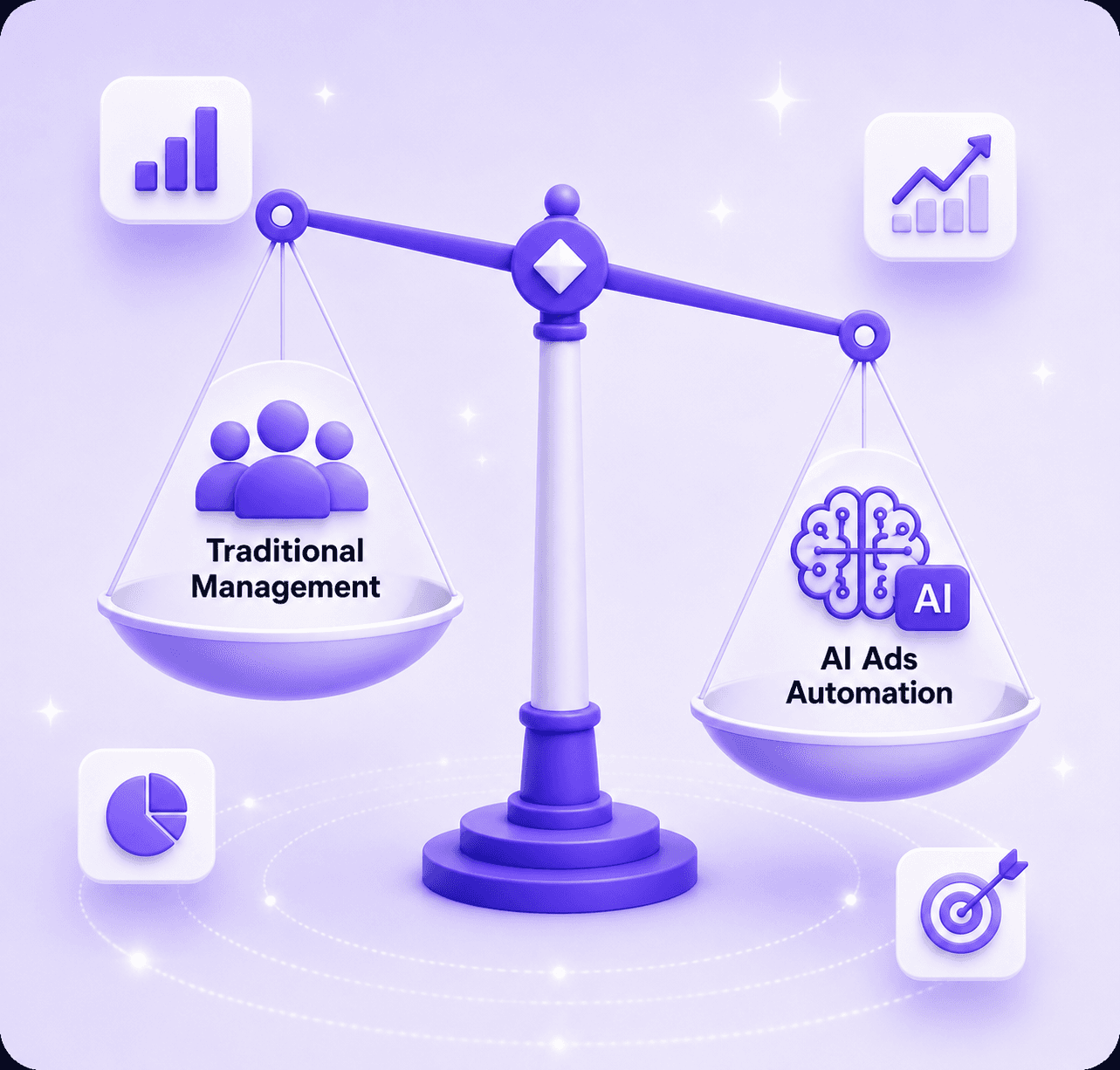
AI Ads Automation vs Traditional Advertising Management
The way businesses manage advertising campaigns has changed significantly. Traditional campaign management depends heavily on manual monitoring and decision-making, while AI-powered advertising introduces intelligent automation.
However, AI automation does not completely replace traditional marketing skills. Human marketers are still essential for brand strategy, customer understanding, creative direction, business goals, and campaign planning. AI improves execution while humans guide the overall strategy.

Watch out for
Common Mistakes Businesses Should Avoid
Although AI advertising provides many advantages, businesses need to implement it correctly. Using AI without proper strategy can create poor results.
1. Expecting AI to Replace Marketing Strategy
AI can analyze data, identify patterns, and automate processes, but it cannot fully understand brand positioning, business goals, customer emotions, and market relationships. Successful advertising requires both AI capabilities and human strategic thinking.
2. Automating Campaigns Without Proper Data
AI systems depend on quality data. If tracking setup is incorrect or campaign data is insufficient, AI recommendations may not provide accurate results. Before automating, ensure proper conversion tracking, accurate analytics, clear objectives, and reliable customer data.
3. Ignoring Creative Quality
AI can help optimize advertising, but creative quality still matters. Many businesses focus only on automation while ignoring messaging quality, brand identity, customer needs, and visual storytelling.
4. Not Monitoring AI Recommendations
Automation does not mean businesses should completely stop monitoring campaigns. Regular reviews help ensure campaign goals stay aligned, budget decisions are appropriate, brand messaging remains consistent, and optimization decisions make business sense.
Do it right
Best Practices for Implementing AI Ads Automation
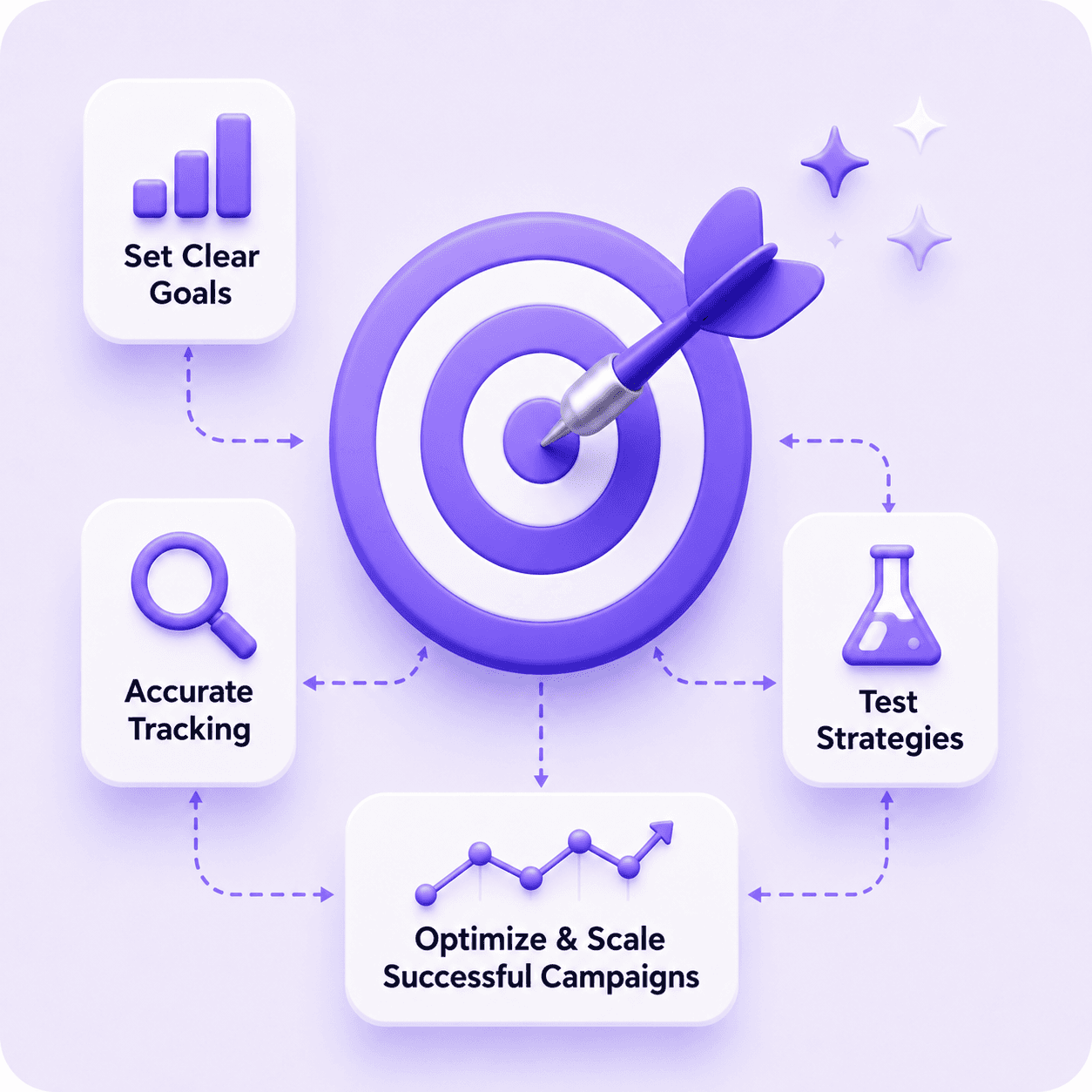
To achieve better results, businesses should follow a structured approach when adopting AI-powered advertising.
1. Define Clear Campaign Goals
Before using AI automation, clearly define objectives — increase website conversions, generate qualified leads, improve ROAS, reduce customer acquisition cost, or increase brand awareness. Clear goals help AI systems optimize campaigns more effectively.
2. Maintain Accurate Tracking
AI depends on campaign data. Ensure proper tracking for website visitors, leads, purchases, customer actions, and conversion events — accurate tracking lets AI understand what actions create real business value.
3. Test Different Strategies
AI becomes more effective when it has enough information to learn. Continuously test different audiences, creative formats, ad messaging, landing pages, and campaign structures.
4. Combine AI Insights With Human Experience
The strongest advertising strategies combine AI intelligence, human creativity, and marketing expertise. AI provides data analysis, automation, recommendations, and performance insights; humans provide strategy, creativity, brand understanding, and business decisions.
Looking ahead
The Future of AI Ads Automation in 2026 and Beyond
The future of digital advertising is moving toward more intelligent and autonomous marketing systems. As AI technology continues to improve, advertising platforms will become better at understanding customer behavior, creating personalized experiences, predicting campaign outcomes, automating optimization decisions, and improving marketing efficiency.
Future AI advertising systems may help businesses manage complete marketing workflows, including campaign creation, audience research, creative generation, performance optimization, reporting, and customer engagement.
However, successful businesses will still require human creativity, strategic thinking, and strong customer understanding. AI will not replace marketing teams; it will help them achieve more with better tools and smarter insights.
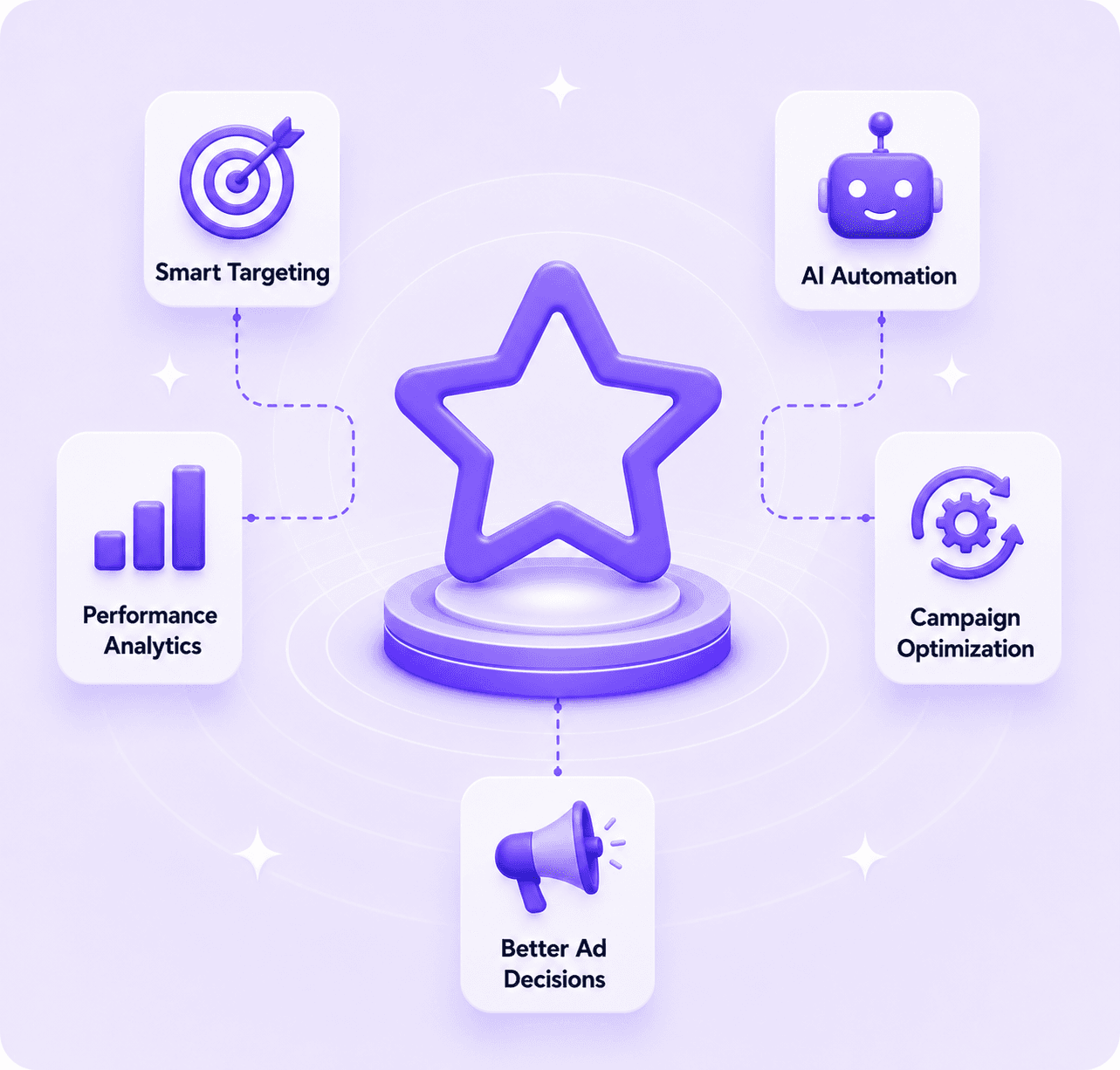
Where we come in
How TEadifyz.ai Helps Businesses Automate Advertising
Managing digital advertising campaigns requires continuous monitoring, optimization, and decision-making. TEadifyz.ai helps businesses simplify advertising management by combining artificial intelligence with marketing automation.
With AI-powered advertising capabilities, businesses can improve how they create, analyze, and optimize campaigns. TEadifyz.ai helps marketers:
- Automate repetitive advertising tasks
- Understand campaign performance faster
- Identify optimization opportunities
- Improve advertising efficiency
- Make smarter marketing decisions
Whether you are a startup, SaaS company, ecommerce brand, real estate business, or marketing agency, AI-powered advertising automation can help you scale campaigns more efficiently.
The future of advertising is not only about spending more budget. It is about making smarter decisions with better technology.
Questions, answered
Frequently Asked Questions
AI Ads Automation is the use of artificial intelligence and machine learning technologies to automate, analyze, and optimize digital advertising campaigns — helping businesses manage campaign monitoring, audience analysis, budget optimization, creative evaluation, and performance reporting using real-time data.
It continuously analyzes campaign data to identify optimization opportunities through better audience targeting, budget optimization, faster campaign adjustments, creative performance analysis, and data-driven recommendations — reducing manual work so marketers can focus on strategy and growth.
No. AI automates data analysis, optimization suggestions, performance monitoring, and workflows — but humans are still required for business strategy, brand decisions, creative direction, and understanding customer needs. The best results come from combining both.
Yes. It reduces the complexity of managing digital campaigns, helping small teams save time, optimize budgets, understand performance, and compete with larger businesses without a large advertising department.
It can help reduce unnecessary spending by identifying inefficient campaigns and improving optimization, though results depend on factors like strategy, industry, competition, and advertising goals.
Yes. For Google Ads it can help with keyword analysis, bid optimization, search performance monitoring, and conversion improvement. For Meta Ads it can help with audience analysis, creative optimization, campaign monitoring, and performance insights.
Almost any business running digital ads — SaaS companies, ecommerce brands, real estate businesses, marketing agencies, startups, local businesses, and enterprise companies alike.
Cost depends on the platform, features, advertising volume, and business requirements. For most businesses, the value comes from reduced manual effort, improved efficiency, better budget utilization, and faster optimization — worth weighing against the subscription cost.
Conclusion
Digital advertising is becoming more competitive every year. Businesses are managing more platforms, increasing advertising complexity, and dealing with larger amounts of campaign data.
Traditional campaign management methods require significant time and manual effort. While experienced marketers remain essential, AI Ads Automation provides a smarter way to improve efficiency and scale advertising operations.
AI helps businesses analyze performance, optimize budgets, understand audiences, evaluate creatives, and identify new opportunities faster.
The future of marketing will not be about choosing between humans and AI. It will be about combining human creativity with artificial intelligence to create better advertising strategies.
Businesses that adopt AI-powered advertising solutions today can build more efficient marketing systems, make faster decisions, and stay competitive in the evolving digital landscape.